
Phones and everyday life · about 4 minutes to read
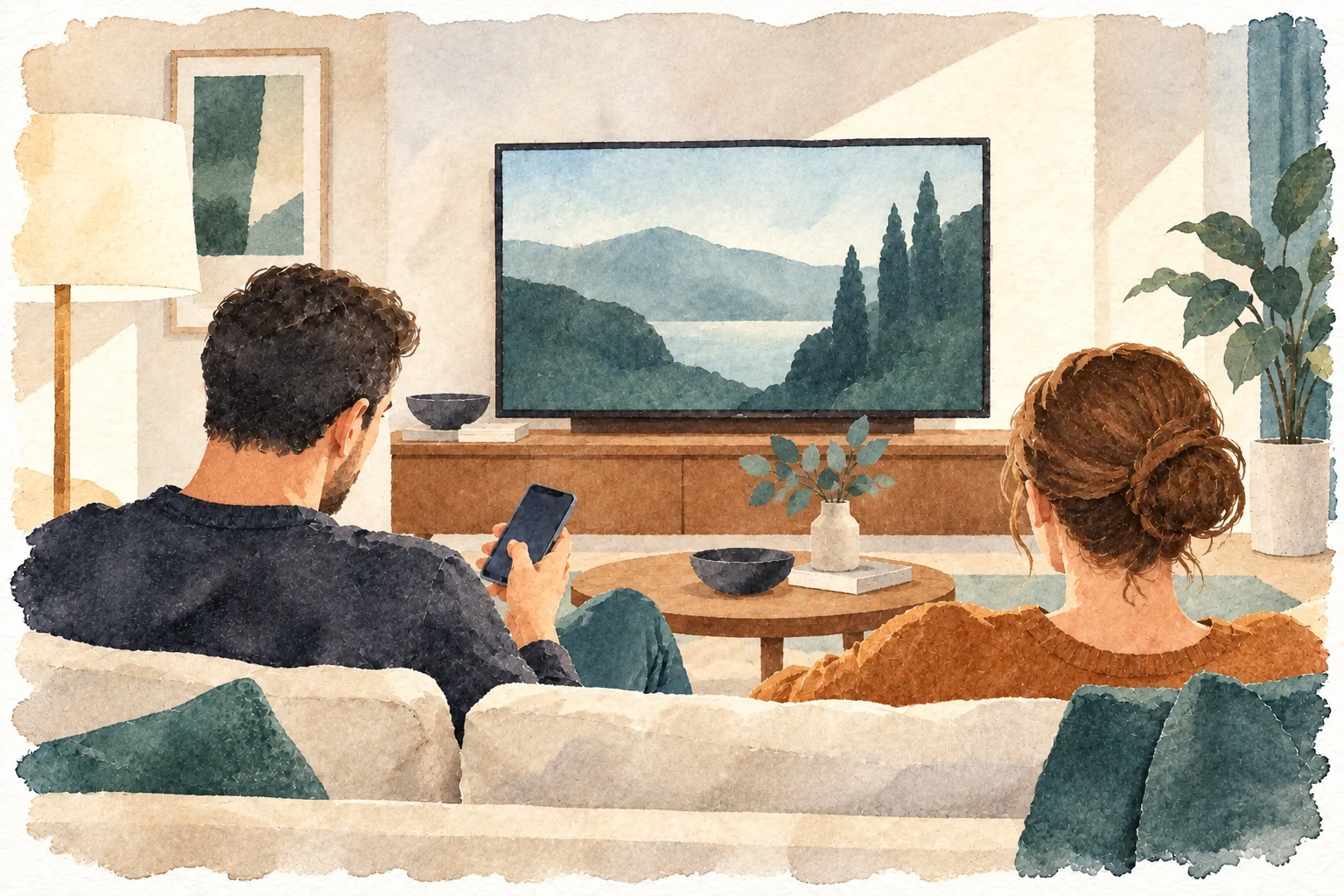
You are watching a film together. An actor looks familiar, but you cannot remember where from. You reach for your phone to check their name. While you are there, you see another title and read a couple of sentences about the cast. When you look up, someone on the TV screen is already leaving the room. You do not know why.
The starting point is ordinary: curiosity. The goal was specific and sensible. You wanted information connected to what you were doing. Only later did it turn out that something else had slipped past along the way.
A useful question can interrupt a moment too
Being able to check information quickly is one of a smartphone’s advantages. It lets you identify a plant, find your way, understand a reference in a book or check whether you remember a fact correctly. There is no reason to treat curiosity itself as a bad habit.
Sometimes, though, a question sets the next action in motion before we decide whether we want to leave the previous one right now. The answer comes quickly, but the conversation or film keeps going meanwhile.
In that situation, a phone can help and get in the way at once. It provides the information you need while making you miss part of what you meant to be interested in. Both can be true. The value of the answer does not automatically remove the cost of the interruption.
Is every answer needed straight away?
You know the moment: a question comes up and your hand goes straight to your phone. The chance to find an answer is so close that it is easy to skip another question: do I need it right now?
Between having a question and finding an answer lies the question of timing. Sometimes an explanation is needed to follow the rest of the story. At other times, an actor’s name will not change what you are watching. It is still interesting information, but it may be less urgent than it first seemed.
Do you ever want to understand what you are taking part in better, only to stop taking part for a moment while searching for the answer? You can look at this situation without judging your curiosity or treating every search as a problem.
Two screens, two different intentions
Not every situation involving a second screen means there is a difficulty. You might check the cast together, making it part of your evening. You might watch a broadcast while following useful statistics. You might also deliberately choose a light programme that does not need your full attention.
It is different when you wanted to follow the story but keep having to ask what happened. Or when the other person waits to continue their story because you are still reading the answer to an earlier question.
The difference is not visible in the mere fact of using a phone. It appears in the relationship between what you wanted and how the moment unfolded. Was checking part of the shared activity? Or did it begin to displace it? There is no need to decide that for everyone in advance.
Curiosity does not have to go
This is not about giving up questions or pretending we remember everything. We can value easy access to knowledge and still notice moments when every unknown immediately directs our attention to a screen.
Perhaps there is no significant cost for you here. Or perhaps finishing a conversation, a scene or a meal together mattered more recently than a quick answer. It is worth allowing yourself either view, depending on the situation.
A question to reflect on: what was the last thing you wanted to “just check” that pulled you away from what was right in front of you?
If you want a broader picture of your own situations with your phone, take a look at the free Mapa Smartfonowych Nawyków (Smartphone Habit Map).
Also read: We are together, but our attention is elsewhere. A phone between people.
