
Phones and everyday life · about 3 minutes to read
Topics: Children and school
A photo of a classmate appears in the school group. Someone adds a joke, someone forwards it. After lessons, the situation continues on phones. The next day the children meet in the same classroom, but the atmosphere has changed.
In a situation like this, “put your phone away” may stop the use for a moment. But it does not explain what to do with the photo, how to respond to a hurtful comment or whom to ask for help.
Quick fingers are not the whole skill set
A child may quickly find a video, switch apps and send a message, yet not know how to judge information’s credibility or respond to pressure from a group. Operating a device and understanding a social situation are different things.
In the materials accompanying its guide “Pułapki sieci, sieć pułapek”, NASK highlights precisely these broader skills: critical thinking, privacy, emotions and responsible decisions. It also stresses the importance of talking and being alongside a child. [1]
So for parents and teachers, “how much do you use it?” may matter alongside “what happened there?”. An answer about time cannot replace a conversation about what a child experienced.
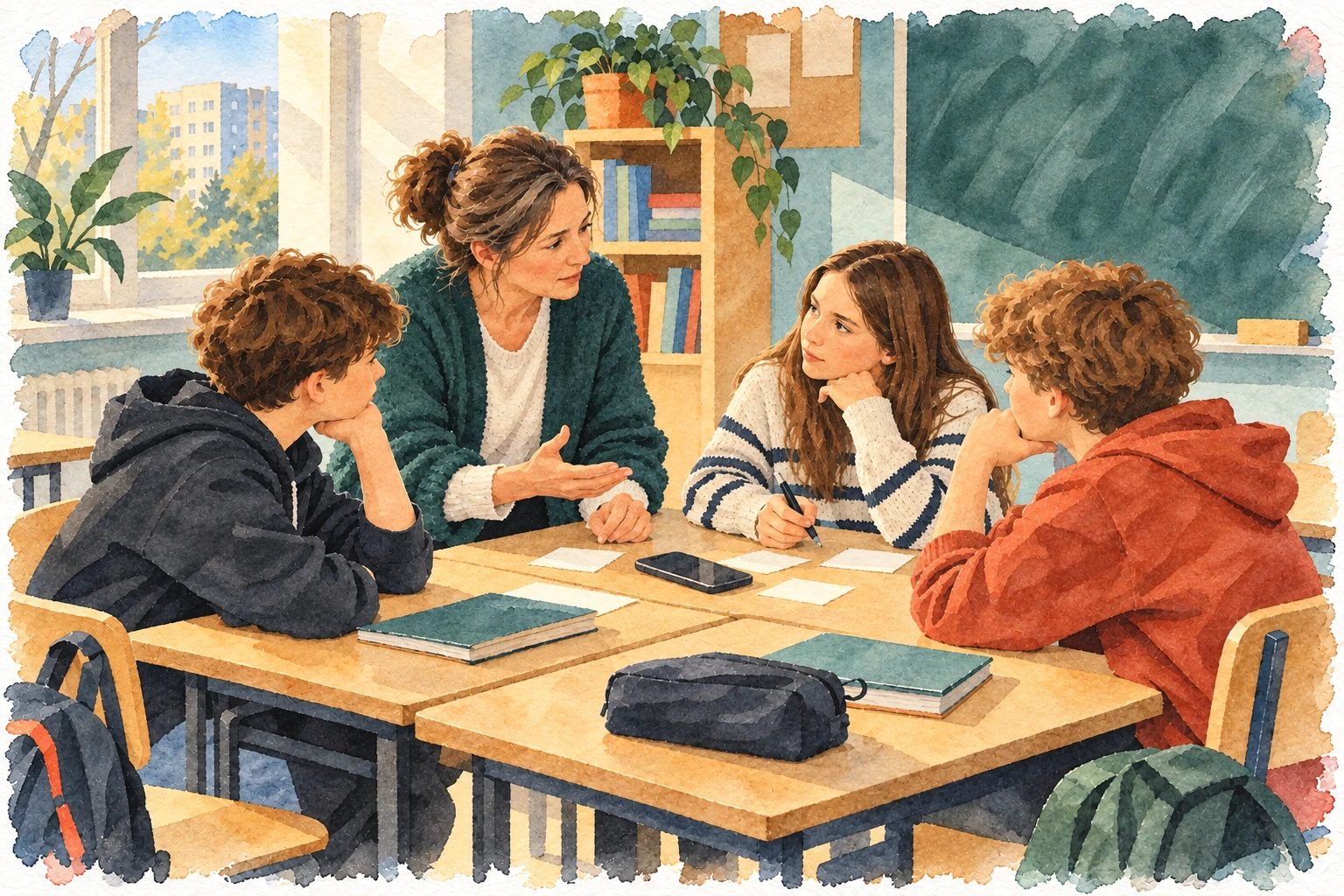
A lesson can start with an everyday situation
Imagine a classroom conversation about a photo sent without asking. There is no need to start by publicly holding particular pupils to account. You can discuss a fictional example: who is in the photo, who received it, what changes when it is shared further?
You can talk similarly about a message that causes worry or a video making a sensational claim. The aim need not be to memorise a list of app names. Recognising when to pause and ask for support matters more.
When actual harm occurs, adults need to respond in line with the school’s procedures and the scale of the incident. A general conversation about habits does not replace that help.
Life away from a screen is not a punishment
A break in the playground, a conversation after lessons or a shared task can be worthwhile in themselves. They do not have to serve only as rewards for managing without a phone.
It is also worth asking children what helps them join in these moments. Do they have someone to spend break time with? Is the activity accessible to them? Do adults leave room for rest, or turn every free minute into another task?
Not every difficulty stepping away from a screen has the same explanation. That is another reason why a ban alone does not answer every question about a child’s everyday life.
School and home can speak a similar language
At home, the conversation can be about the same respect that matters in the classroom: asking before posting, responding to ridicule and accepting a request for help without immediately blaming someone.
You do not have to know every internet trend. You can say: “I don’t know this app. Show me what it’s about.” This begins a shared understanding of the situation rather than giving up adult responsibility.
A question to reflect on: does your child know whom they can turn to when something difficult happens online?
As an adult, you can also look at your own behaviour with the free Mapa Smartfonowych Nawyków (Smartphone Habit Map). After all, the conversation about technology includes the example we set too.
Read also: “Dad, look.” When a phone interrupts time with your child.
Further reading
[1] NASK / Nationwide Education Network (2026), “Po pierwsze: rozmowa. Premiera poradnika «Pułapki sieci, sieć pułapek»”. Educational material for parents and carers. Description and link to the guide.
