
Phones and everyday life · about 4 minutes to read
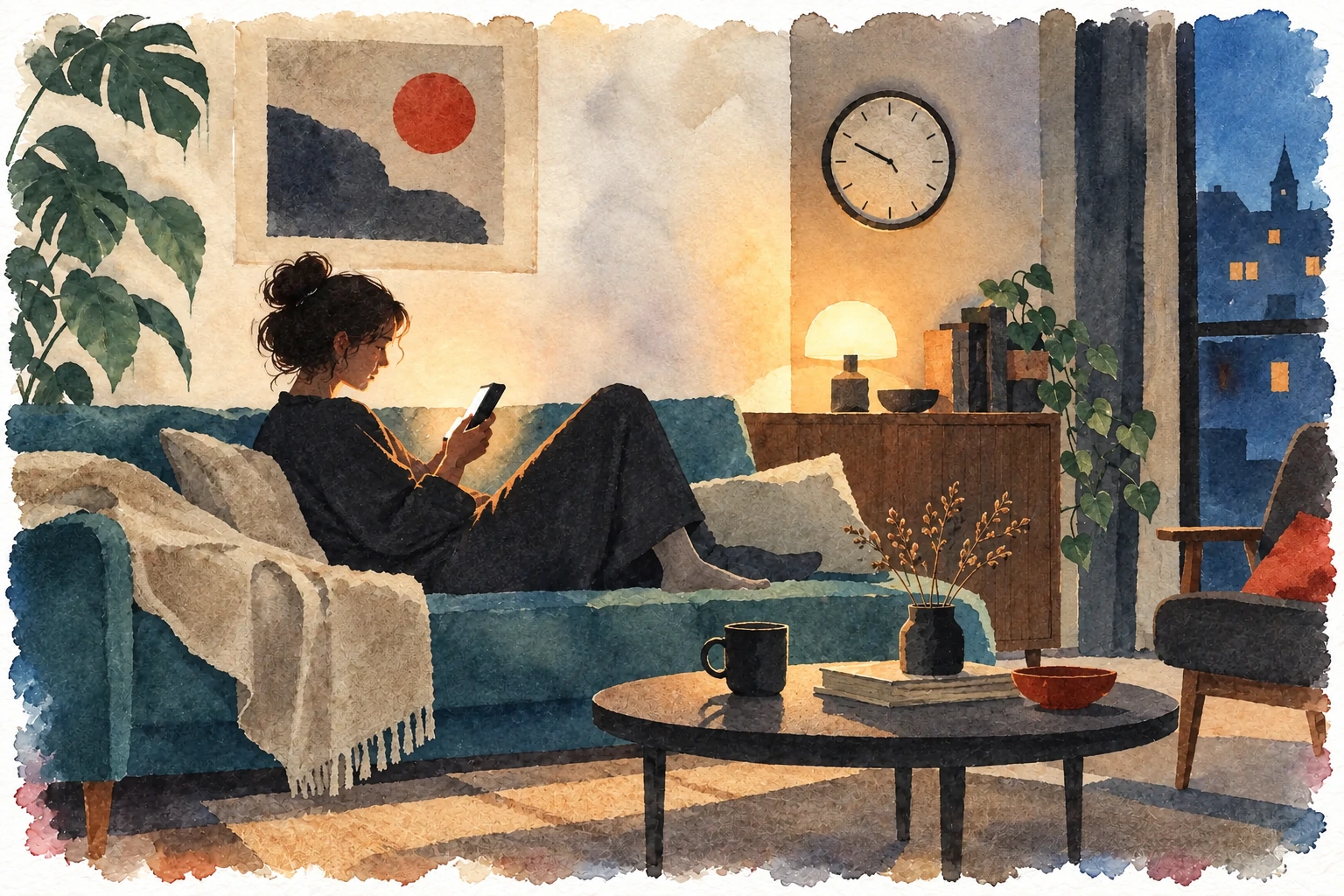
The day is over and responsibilities ease off for a while. You sit down with your phone to watch something light. At last, there is nothing to organise and no important decisions to make.
After a while, you check the time. It is later than you planned. You did not mean to stay this long. Yet it is hard to pinpoint when a short rest turned into the whole evening.
This description does not fit every use of a phone after work. A film, conversation or reading can be a chosen and enjoyable part of the day. It is worth taking an interest when the end regularly moves later against your intentions.
Something can bring relief and still have a cost
After an intense day, it is easy to understand the appeal of content that arrives without preparation. There is no need to go out, arrange anything or choose a bigger activity. For a while, you do not think about what was difficult.
The difficulty may come later: when planned rest takes the place of sleep, a conversation or a quiet end to the day. Enjoyment during it and dissatisfaction afterwards can belong to the same evening. One does not cancel the other.
A phone can offer a moment of escape after a difficult day while also delaying bedtime. It is worth noticing whether your evening looks like that. The screen alone does not, however, explain every sleep difficulty.
What does research say about phones and sleep?
A study published in “PLOS ONE” in 2016 analysed data from 653 adults. An app measured screen activity, and participants provided information about sleep. Longer use around bedtime was associated with less favourable sleep measures, including sleep quality and time taken to fall asleep. [1]
This is an association, not proof of a single cause. The authors noted that poorer sleep may also lead to more frequent phone use. We cannot conclude from this that the device is responsible for every sleepless night.
This distinction lets you take your own evening seriously without fearmongering or attributing every difficulty to one screen.
A phone need not take up the whole evening to push something back
We often picture “too much phone use” as many hours without a break. In everyday life, the cost may look smaller. You wanted to finish earlier, but checked one more message. Then came a video, another topic, another reply.
Each individual thing may have seemed small. The change only became visible in the time you stopped. That is why an overall daily report does not always answer the most important question: what happened at this particular moment?
It is also worth distinguishing a late evening you choose from a situation that repeats despite other plans. Staying up late to watch something once need not require fixing.
Not everyone needs another activity
It is easy to suggest sport, a course, a challenging book or a new hobby. But someone looking for relief after a whole day may not need another demanding item on the agenda.
What matters is recognising what the evening was meant to provide. Entertainment? A moment for yourself? Contact? Rest? A consciously chosen pleasure is different from use that continues long after the pleasure has ended.
This is not a guide to treating sleep difficulties. When they persist or make everyday functioning harder, it is worth discussing them with a doctor. In an ordinary look at habits, though, the first topic can be the gap between the plan and when the evening actually ended.
A question to reflect on: after your last evening with your phone, did you feel rested, or mainly surprised that it had got so late?
Source
[1] Christensen M.A. et al. (2016), “Direct Measurements of Smartphone Screen-Time: Relationships with Demographics and Sleep”. An observational study, not an experiment confirming a cause. Full publication.
