
Phones and everyday life · about 3 minutes to read
Topics: SafetyTeenagersSocial media
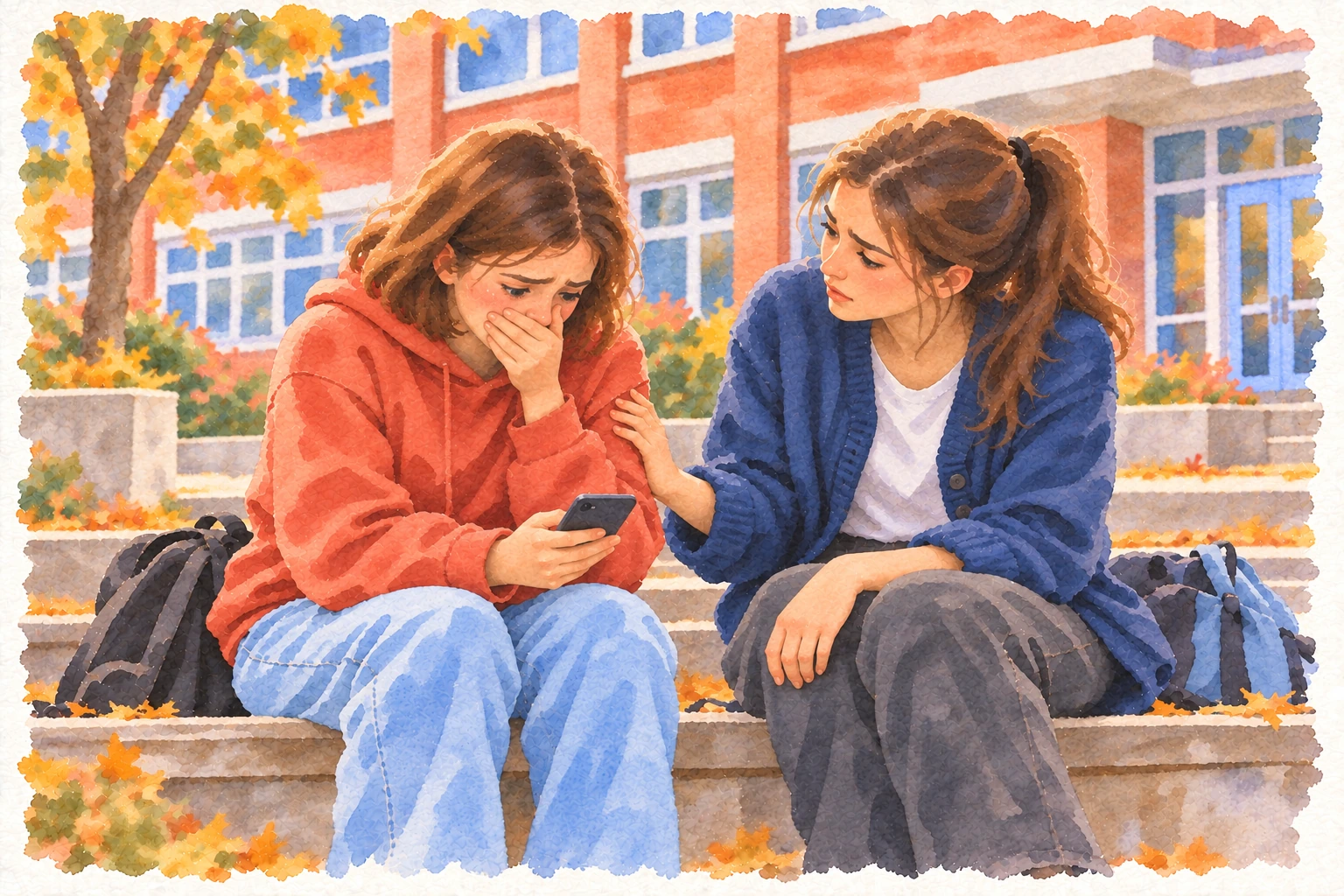
An edited photograph of a girl appears in the group chat. Someone adds a comment; others react with laughter. When she asks for it to be deleted, she hears: “It is only a joke.” A moment later, the image reaches another conversation.
The author’s assurance of good intentions alone does not determine the significance of the situation. If someone is being humiliated, intimidated or targeted by a group, they need support. Telling them “just do not look” does not stop the material spreading.
Cyberbullying is more than a harsh comment
It can include harassment through messages, threats, impersonation, publishing embarrassing material and deliberate humiliation. Repetition and the group’s advantage can make it harder to defend oneself. A single post can also cause serious harm, especially when it is shared further.
Not every argument is the same as persistent harassment. But you do not need to wait for further incidents or a decision on terminology before responding to visible harm. NASK materials highlight both forms of online aggression and the role of bystanders. [1]
A bystander can help too
Not forwarding the material matters. So does a private message to the person being targeted: “I saw that. I do not agree with it. I can go with you to get help.” Support does not require a public argument with the whole group if that could increase the danger.
Reacting with laughter “to avoid standing out” may still be read as support. It is worth discussing with young people that they do not have to write a post to influence what happens to it next.
Support and safety first
When a child shows you a hurtful message, start by listening. “Thank you for telling me” opens a different conversation from “why did you go there?”. Do not promise complete secrecy if protecting the child may require involving others. Explain what you intend to do.
Keep the information needed for a report: the post’s address, the account name, the date and screenshots of abusive messages. Do not share it beyond those helping with the case. NASK and the Ministry of Digital Affairs recommend documenting incidents and reporting harmful content to administrators. [2]
If the case involves sexual material featuring a child, do not download it, make copies or forward it as evidence. Save the address and details that allow the content to be located, and agree with the police how to preserve it. Illegal content can also be reported to Dyżurnet.pl. [4]
Where can you get help?
Report the content on the service. If the situation involves school peers, contact the class teacher, school counsellor or school psychologist and agree on the next steps. Threats, blackmail and other serious situations may require contacting the police. If there is an immediate threat to life or health, call 112.
Children and young people can talk free of charge, around the clock, on 116 111. Contact is also available through 116111.pl. [3]
Cyberbullying can affect adults too. Merely reducing the targeted person’s screen time is not a solution. Responsibility for harmful behaviour lies with the person engaging in it, and help should not depend on whether the person harmed can defend themselves effectively.
A question to reflect on: If someone around you showed you a hurtful message, would they know that you would take it seriously?
In cases of cyberbullying, safety and help matter most. Mapa Smartfonowych Nawyków (Smartphone Habit Map) is not for reporting violence or providing intervention.
Read also: Beside us, in their own online world. What do we know about a teenager’s digital world?.
Read also: More than “put your phone away”. What’s worth teaching children about the internet.
Sources
[1] NASK/OSE (2025), “O cyberprzemocy i hejcie w sieci”. Educational material for parents and teachers, not a causal study. Go to source.
[2] Ministry of Digital Affairs and NASK, “Zgłaszaj dowody cyberprzemocy”. Recommendations on documenting incidents and reporting content were used, without carrying over outdated legal information. Go to source.
[3] Fundacja Dajemy Dzieciom Siłę, information about 116 111. Availability of support checked on 23 October 2026. Go to source.
[4] eSafety Commissioner, “How to collect evidence”, and Dyżurnet.pl reporting instructions. Safety recommendations on documenting incidents without copying sexual material involving children; this is not an interpretation of Polish law. Go to source.
