
Phones and everyday life · about 4 minutes to read
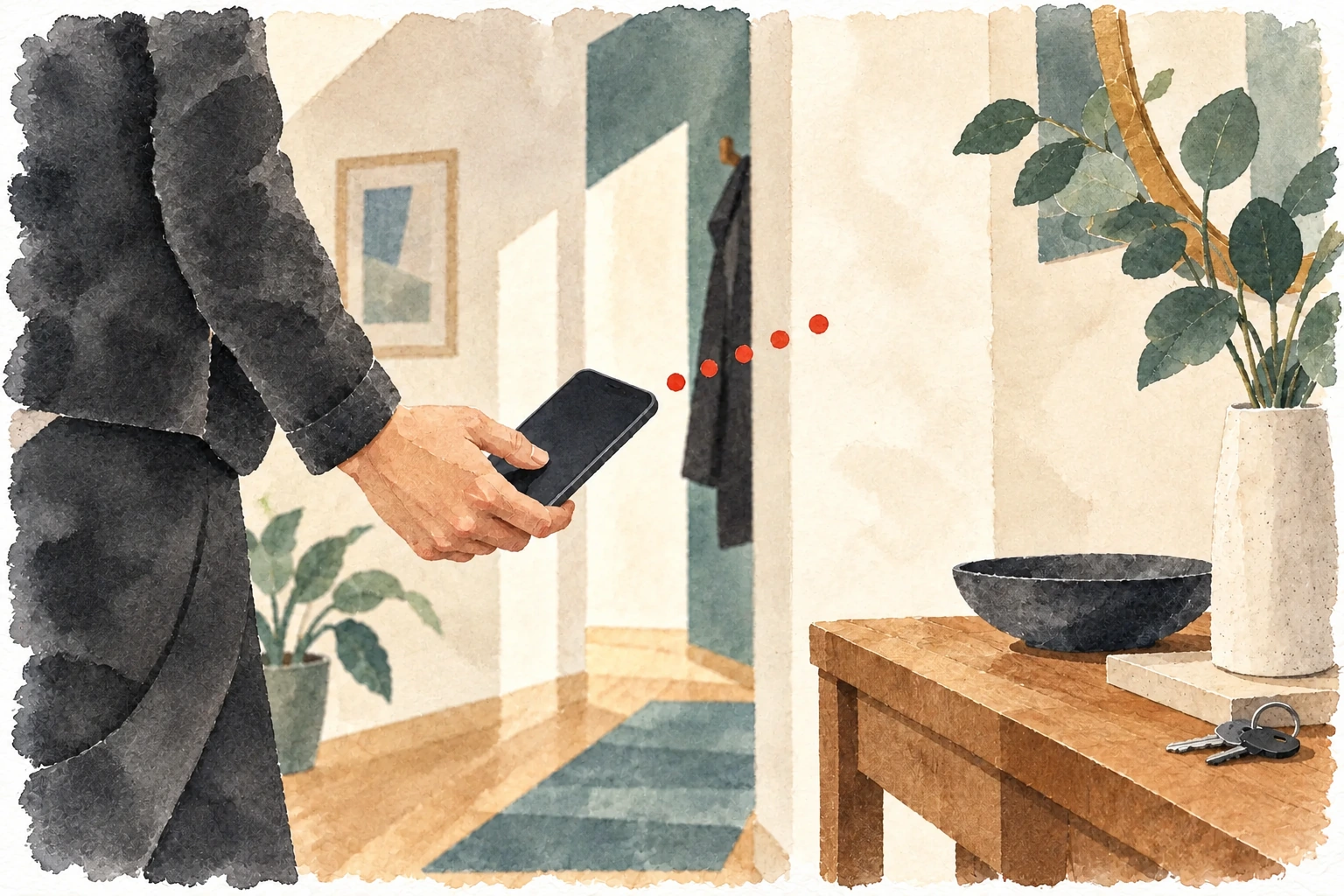
You unlock the screen. There is nothing new. You put the phone down, and a moment later it is in your hand again. If someone asked what you were looking for, the answer would not be obvious.
It is a small, ordinary moment. It does not look like a big problem, especially when it lasts a dozen or so seconds. Only in the evening comes the feeling that the day broke up into little checks and there was no quiet moment left for what was meant to matter.
There is no need to start with a label or calculate whether you have exceeded an allowable number of minutes. First, it is worth seeing the difference between using a phone for a specific purpose and opening it almost without deciding to.
A habit can come before a clear intention
A queue, the end of a task, a moment of silence at the table. In these situations, a screen can be the most readily available response. There is no need to choose an activity, find someone to talk to or even consider what you need. The content is already waiting.
Researchers have described this phenomenon for years. In a paper published in “Personal and Ubiquitous Computing”, Antti Oulasvirta and colleagues called it a checking habit: brief, repeated visits to readily available, changing content. In the studies analysed, these checks sometimes led to further use of the device. This describes a mechanism, not a diagnosis of everyone who often looks at a screen. [1]
In everyday life, the start can be entirely practical: you check the weather. Then you see a message, look in an app and come across a video. The first goal has been achieved, but the use continues.
Screen time alone does not tell the whole story
Two people can have similar figures in their phone reports and completely different experiences. One talks to someone close to them who lives far away, reads and works. The other repeatedly returns to content they did not really want to see.
The difference is not only in the number of minutes. Purpose, being able to stop and what is happening alongside also matter. Does the phone help with what you chose? Or does it push back something that was supposed to happen earlier?
An interrupted conversation, an abandoned activity, a later end to the evening. These are specific situations you can look at instead of judging the whole day solely by the number of hours with your phone.
“Of course I can put it down” and “why didn’t I put it down this time either?”
You can be able to put your phone down and still regularly use it longer than you wanted. You can also use it a lot without feeling a significant cost. It is worth distinguishing these situations.
What matters is a repeated gap between intention and what actually happens. You wanted to watch one thing, but an hour passed. You meant to send a message, but the conversation at the table ended meanwhile. Simply remembering an evening like that is no reason to judge yourself. But it can tell you about something you want to look at.
Nor should we assume that someone saying “I don’t have a problem with it” is hiding the truth. They may feel no cost, have different priorities or simply not want to talk about it. Change does not require convincing everyone to share the same view of phones.
Where do you start in understanding your own situation?
With one recent moment you remember well. Without reconstructing the whole week. What was supposed to happen? Why did the phone end up in your hand? After putting it down, did you return to what you had chosen before?
Questions like these do not replace professional help when use is linked to serious difficulties. Nor are they a test marked “right” or “wrong”. They help you name your own experience without labelling yourself.
A question to reflect on: have you recently opened your phone more often for something specific, or simply because there was a free moment?
Source
[1] Oulasvirta A. et al. (2012), “Habits make smartphone use more pervasive”. A description of habits based on several studies; it does not set a threshold for diagnosing a disorder. Publication and abstract.
