
Phones and everyday life · about 3 minutes to read
Topics: Attention and everyday habits
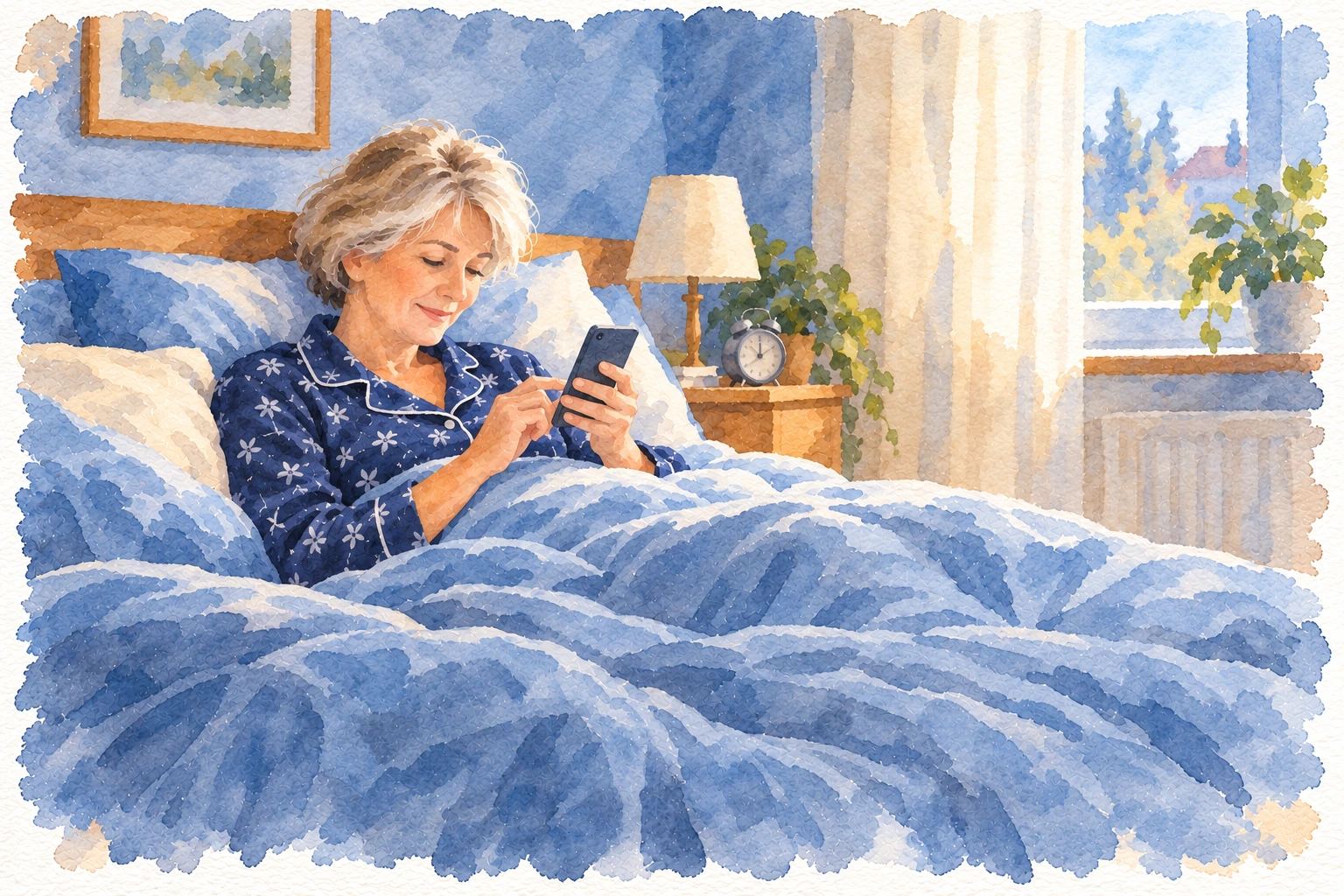
You wake up and reach for your phone to turn off the alarm. While you are there, you check the weather. There is also a message from someone close to you, so you open the messenger app. Then the news too. When you put the device down, more time has passed since waking than you thought.
A morning like this does not have to mean there is a problem. The question is rather: is this how you wanted to spend it? A phone can help you start your day. It can also set off a sequence of activities you had not planned at all.
From one thing to the next
Checking the time has a clear ending: you now know what time it is. News updates are different. One item follows another, and the list does not tell you that you have seen enough. The reason you unlocked the screen may have been dealt with long ago, even while the phone remains in your hand.
In their research, Antti Oulasvirta and colleagues described brief, repetitive checking of easily accessible, changing content. They observed that these checks sometimes lead to further activity on the device. This describes a mechanism, not a diagnosis of addiction. [1]
These studies did not concern mornings alone. They therefore do not prove that using your phone after waking spoils the day, or that there is a scientifically established number of minutes for which everyone should avoid it.
Mornings do not all look the same
For someone who works shifts, the first message may concern their rota. Someone is waiting to hear from an adult child; someone checks the bus timetable; someone simply enjoys reading under the duvet for a while. Using a phone in bed alone says little about the meaning of that moment.
It is worth distinguishing these situations from a morning when you have no time for breakfast because browsing went on unexpectedly long. What matters is the difference between an activity you chose and an outcome you did not want.
You do not need to compare yourself with someone else’s routine. A photograph of a mug, a book and a rolled-out mat does not show what someone’s day is really like. Your morning does not have to be a self-improvement project.
What did you actually want to check?
Think back to the last time you woke up. What was the first thing you did on your phone? Do you remember the moment it was done? What did you open next, and did you still need it?
These questions help describe a specific sequence of events. “My phone takes away my mornings” is a broad judgement. “I check the weather, then go into the comments and get up later than I wanted” already shows a situation you can examine.
Notice the beginning, notice the end
Sometimes, after looking at it this way, you will decide that morning reading works for you. At other times, you will see that what you needed more was to get up calmly or talk to someone over breakfast. Both answers are possible.
You do not need to draw a conclusion about your entire life from one morning. Simply notice whether your phone helped you do what you intended or led you further before you had a chance to decide.
A question to reflect on: What did you check first this morning, and what did you end up staying with?
The free Mapa Smartfonowych Nawyków (Smartphone Habit Map) lets you look at your own situations with your phone, including those that start your day.
Read also: Why are you checking your phone again? A reflex that is easy to miss.
Read also: Am I the only one who does not look or live like that? The world portrayed on social media.
Sources
[1] Oulasvirta A. et al. (2012), “Habits make smartphone use more pervasive”, Personal and Ubiquitous Computing, 16, 105–114. Studies of behaviour associated with checking phones, not a test of morning routines. Go to source.
